
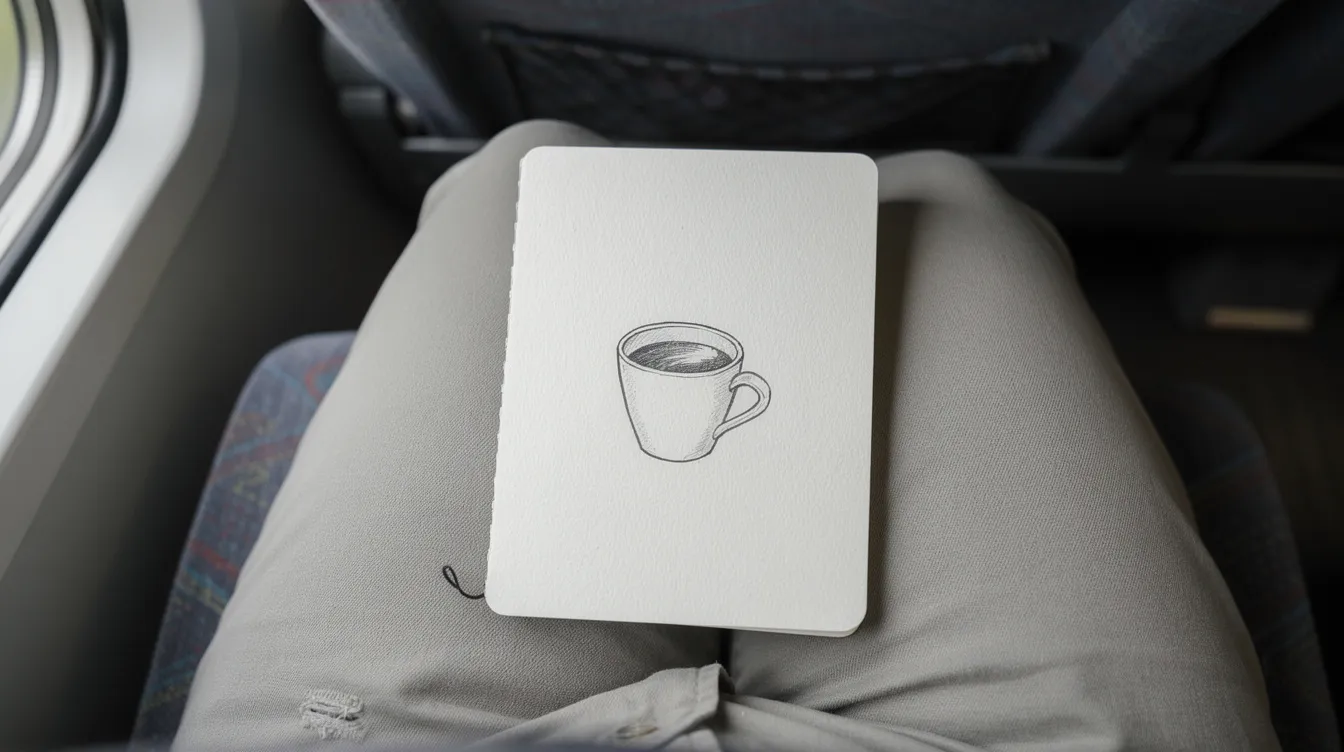

I had thirty ideas on a list and no plan for failure. On day four, a tired Thursday, the prompt was “a bicycle.” I stared at my sketchbook on the train and the whole project felt like homework. I nearly quit. Two Januaries later I am still drawing, and the difference was not talent or motivation. It was a smaller bar, a fixed time and place, and a rule I wrote for missed days before I needed it.
What I Mean by a Draw Challenge
A draw challenge is a creative prompt with a set timeframe and a subject constraint, usually one drawing per day, meant to help you draw more consistently rather than produce a masterpiece. I treat it as a repeatable sketchbook practice: thirty small votes for being someone who draws, not a portfolio.
That makes it useful for beginners, people coming back to drawing, and busy people with ten or fifteen spare minutes who want a sketchbook habit without pressure. Drawing challenges help break creative blocks, build discipline, and make regular practice sustainable because the goal is consistency, not perfection or long sessions.
Below, I’m getting into what a draw challenge looks like in practice: how to set a realistic goal, choose prompts, build a short sketchbook routine, handle missed days, try collaborative versions, and keep going after the first burst of motivation.
Why I Choose One Drawing Per Day
Plan for your worst day, not your best. One drawing is the floor, not the maximum. Drawing for ten minutes daily can build a habit, and that single sketch can fit a commute, a lunch break, or the space between dinner and sleep. As a transit planner, I know habits stick when they run where people already travel. The benefits of a low target are simple: you actually do it.
Setting a Realistic 30 Day Goal
Most challenges use a month. The 100 Day Project challenges participants to commit to a specific action for 100 days, but thirty is plenty to start. Art Prof’s challenge suggests spending 5 to 10 minutes per drawing, which is realistic. My own floor is three minutes with no maximum. Drawing challenges can help improve technical skills and artistic discipline, but only if you complete them. Define “done” before starting: the pen touched the page and the subject is recognizable. That is the whole game.
Preparing My Sketchbook Routine
Keep your sketchbook and one tool somewhere visible. Choose a regular time. I prep before my commute: sketchbook in coat pocket, pen clipped inside. Remove every unnecessary setup step. The Sketch a Day app provides daily drawing prompts if you want ideas on your phone, but a written list works too. Starting a daily sketching habit means making the first touch effortless.
Choosing Prompts for My Drawing Challenge
Simple, concrete objects are easier than abstract feelings. “Kettle” is easier to start than “the feeling of waiting.” Daily prompts can inspire your drawing practice without draining your energy on decisions. Include objects that fit small sketchbook pages. Keep a backup list of five easy ones for when nothing comes. Using an art prompt for the first time feels odd, but it removes the blank page stare. Explore a theme you enjoy, like household items or transit scenes.
Drawing Challenge Ideas for Beginners
Try these to start:
-
One household object (cup, lamp, kettle)
-
A nearby person in a quick gesture sketch
-
Changing light on a wall, morning versus evening
-
A bus stop shelter or platform sign
Non-dominant hand challenges strip away expectations of technical skill and make you laugh at the results. Draw This In Your Style is a community-driven challenge encouraging creative interpretation if you want inspiration from other artists. Even a blind contour drawing improves hand-eye coordination through focused observation. On platforms like Drawize, daily challenges last for 24 hours, giving you a round of fun with a deadline.
Making Drawing Skills the Focus
Frame practice as observation, not talent. Encourage yourself to notice basic shapes and focus on proportion during selected sessions. Reserve detail practice for optional days. Limited color palette challenges teach artists about contrast and value without full color, which is a useful exercise to add once you have momentum. Watch for small improvements in line confidence rather than chasing a polished artwork. You learn by noticing what repeated practice reveals about your own habits or technique.
Using Short Daily Drawing Sessions
My twelve-minute train ride breaks into three stages: one minute to observe, nine to sketch, two to stop and close the book. Spend about 5 to 10 minutes per drawing. Take breaks every 20 to 30 minutes to stretch if you go longer. Short sessions support repetition, and repetition is where the real progress lives.
Drawing on a Commute
I choose a seat where my page will not get bumped. Subjects from a train window include rooftops, power lines, parking lots. A pocket sketchbook can be used during commutes with minimal fuss. Use a pen that dries quickly and adapt when seats or lighting change. Sometimes the world outside is dark and I sketch my own hand instead.
What I Draw When I Have No Ideas
Draw the nearest object or copy a simple shape. Use yesterday’s subject from a new angle. A five-minute observation sketch of texture or pattern fills a page without requiring ideas at all. There are plenty of things within arm’s reach.
Getting Past the First Page
I treat the first page as practice. Start with an intentionally simple drawing and write the date beside each sketch. Imperfect pages remain useful. My ugly day-four bicycle is still in that sketchbook and I am fond of it. It is a log of where I was, not where I needed to be.
Comparing Two Artists Without Comparing Worth
When two artists answer the same prompt, the drawings will differ. That is the point. Compare choices, not skill. One person draws details of spokes; another draws the shadow. Discourage ranking beginner work. Community-driven events motivate artists to experiment without the pressure of perfection. Participants can vote for their favorite drawings after challenges on some platforms, but votes measure appeal, not worth.
When Two Artists Share One Drawing Challenge
Give two artists the same subject, or let them collaborate on the same prompt, and discuss process after finishing. If they want, they can take turns building the same drawing in one round before discussing the result. Working with others reveals different artistic processes. Collaborative art can harmonize different styles. Each person should keep their own techniques and voice.
Collaborating Without Losing My Routine
Invite a friend into one drawing session and share prompts instead of demanding results. Collaboration expands knowledge and skills as an artist, and art collaboration allows expression of diverse perspectives. Technology enables remote art collaborations, so friends in different cities can join the same challenge. Participating in drawing challenges allows sharing and inspiration among peers. Keep solo sessions available so the habit survives when your collaborator is busy. Many drawing challenges are linked to community engagement and participation.
Reviewing My Drawing Skills Each Week
I flip back through the week’s pile. Seeing seven small drawings in a row helps you collect evidence of progress, which beats any pep talk. Identify one improvement worth noticing and choose one skill for the following week. Avoid judging every drawing individually. Save the full review for after day thirty. Listen to what the collection tells you, not what any single sketch whispers.
Handling Missed Days
A gap is just a gap, not a verdict. Write your missed-day rule at the front of the sketchbook before you need it, so you cannot renegotiate when tired. My rule: do the next day’s prompt on schedule, make up the old one later only as a bonus, never double up out of guilt. Remove punishment from the rules entirely.
Restarting After a Broken Streak
My first action after stopping was to pick the easiest prompt on my list and draw it badly. Do not restart the entire challenge. Returning after a break is part of the habit, not a failure of it.
Creating Flexible Drawing Challenge Rules
Establish a minimum drawing size and set a maximum session length. Allow unfinished sketches to count. Permit changes when circumstances shift. Counting thirty drawings rather than thirty dates was my gentlest option.
Using Inktober Ideas Without Pressure
Inktober is a month-long drawing challenge that occurs every October. Illustrator Jake Parker created it in 2009 to improve his inking skills, and its daily word list is why so many people can begin without a blank-page stare. I adapt seasonal prompt lists by choosing only prompts that fit my routine and replacing difficult ones with familiar subjects. Mermay encourages artists to draw a mermaid every day in May, which is another free prompt structure to explore. Drawize offers a prize for the top Daily Challenge player weekly if competition is your thing, complete with a leaderboard to climb, and some guessing rounds also award points as players solve clue-based prompts. Keep the challenge enjoyable. It is not a contest. For background on the event’s history, see the Wikipedia page.
Avoiding Common Drawing Challenge Problems
Perfectionism is the most common reason for stopping. Limit unnecessary supply changes and reduce prompt research before drawing. Prevent social comparison from controlling your progress. Do not let feedback from strangers decide whether you continue. The matter is between you and your sketchbook.
Making Progress Visible
Photograph selected pages for personal records. I also number each page in the corner. Compare early drawings with later ones and note changes in confidence. Celebrate returning after difficult weeks. Those milestones matter more than any single polished piece.
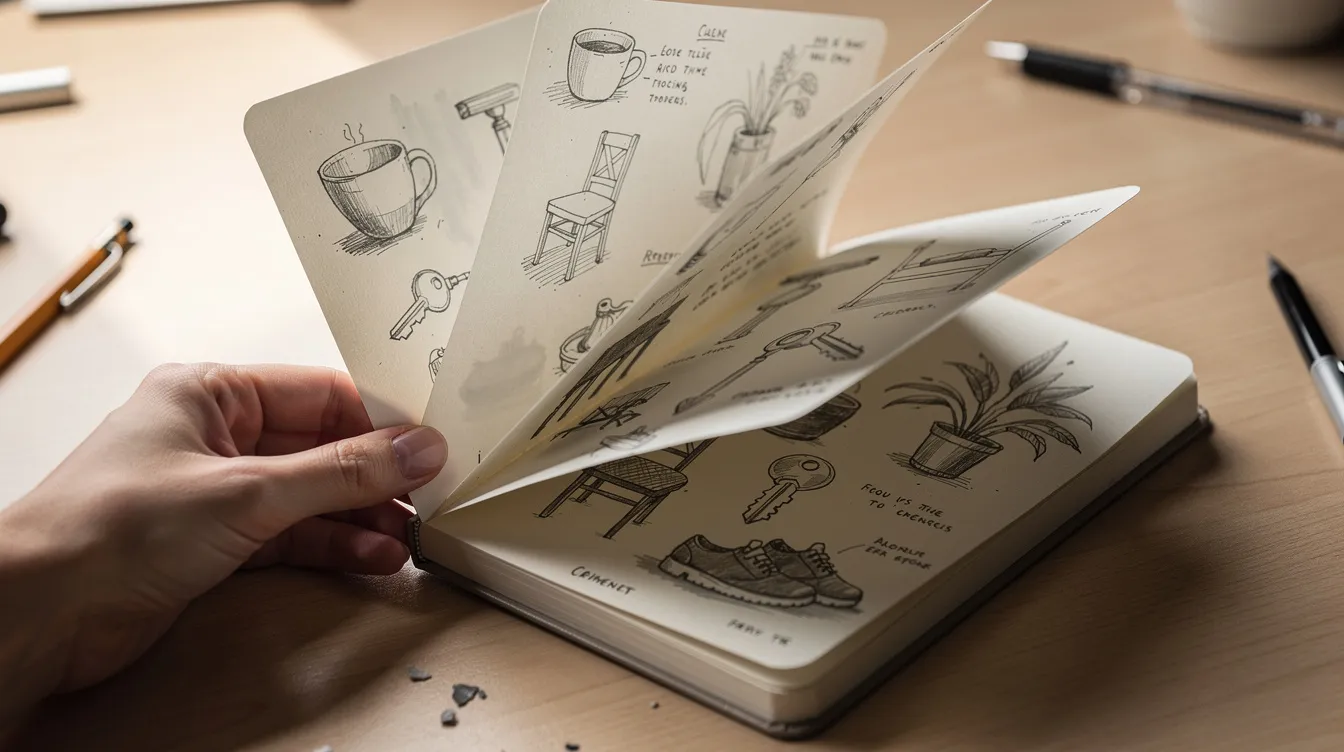
Drawing Challenge Supplies I Actually Use
My portable sketchbook is pocket size, which means a drawing physically cannot get huge. I carry one dependable pen and a backup pencil. Fewer supplies simplify practice. No computer needed, no download required. Less weight, less decision, more space for the actual creative work.
Keeping My Sketchbook Private or Shared
Privacy can make practice easier. Posting every drawing made me redraw things to look better, which slowed me down and killed the fun. I share one or two favorites each week, enough for a message to friends without turning every sketch into a post. Decide what is comfortable. Support from a small group helps more than approval from strangers.
A Sample Seven Day Drawing Plan
|
Day |
Prompt |
Type |
|---|---|---|
|
1 |
Your coffee cup |
Everyday object |
|
2 |
View from a bus or train window |
Transit subject |
|
3 |
Your non-dominant hand |
Hand study |
|
4 |
Redraw day 1’s cup from memory |
Restudy (easy after a harder day) |
|
5 |
A letter or envelope on your desk |
Still life |
|
6 |
Shadows on any surface |
Observation |
|
7 |
Free choice or rest |
Open |
Extending the Plan to Thirty Days
Repeat familiar prompts with new viewpoints. Increase observation time gradually and schedule occasional drawing experiments, like a blind contour or a limited palette. Reserve the final day for reflection and enjoy flipping through your pages.
Measuring Success After Thirty Days
Count completed drawing sessions and review the number of restarted days. Identify the easiest routine: time, place, and tool that worked best. Choose whether to continue the challenge, perhaps with a smaller ongoing habit like one sketch a day. The real measure is whether you want to pick up the sketchbook tomorrow.
My Final Advice for Starting Today
Open your sketchbook and draw the nearest simple object. If you need practical tips to start today without overthinking, begin there. Stop before you overwork the page. What I would tell day-four me: set the bar low enough to step over, tie it to something you already do, and give yourself permission to draw a bad bicycle. Come back tomorrow and do it again. That is how you start and that is how you stay. Once that first page is down, a step-by-step guide to daily sketching covers how to keep the habit going.
FAQ
How long should each drawing take in a draw challenge? Short enough to do on your worst day. My floor is three minutes. Most sessions land around ten.
What if I miss a day? Decide your rule ahead of time and follow it without guilt. A gap does not erase what you have already drawn.
Do I need a prompt list? Not required, but it removes the daily decision where motivation drains. A topic waiting on the page is easier than a blank one.
Should I share my drawings online? Only if it helps you keep going. Play it by ear and remember you owe nobody a post.
What do I do after the challenge ends? Take a few days off, flip through your pages, then pick a smaller ongoing habit. Love the stack of work you collected, and keep the sketchbook in your pocket.