

Introduction: Sketchbook Ideas That Work In Real Life
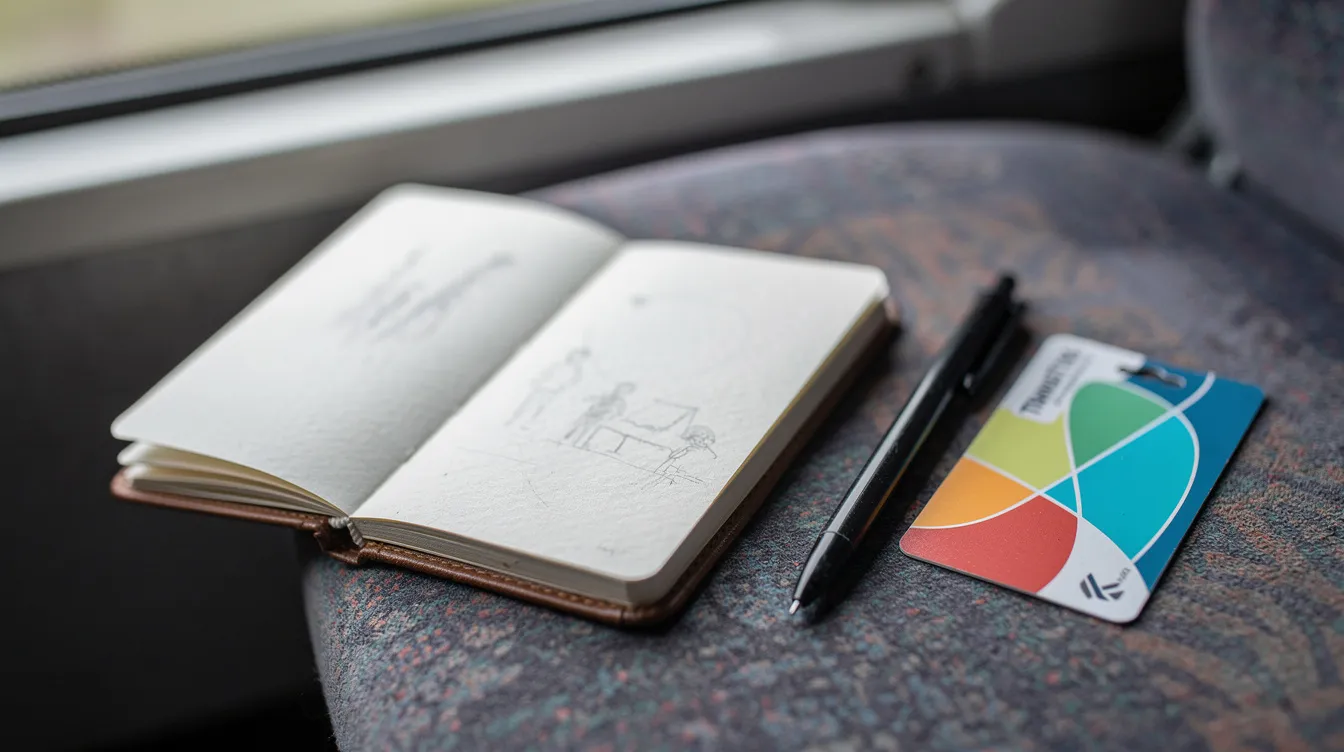
I’m Priya, and I plan bus and LRT routes for a city transit department in Edmonton, Alberta. Two Januaries ago I started keeping a pocket sketchbook on my twelve-minute train ride, and the honest version of how that happened is less graceful than it sounds.
Here is my core answer to the question in the title: stop hunting for a great idea and draw something small within reach. The cup in your hand, your shoes, the pen on your desk. A vague blank page stops most people, not a lack of skill. Once I understood that, my sketchbooks went from a plan I kept postponing to a habit I actually kept.
I started after joining a 30-day drawing challenge, and I nearly quit on day four. I remember staring at the page on the train asking myself, “What would be a good thing to draw?” That question was the problem, not my skill. Drawing prompts help overcome creative blocks, and once I stopped searching for the perfect subject and began sketching the headrest in front of me, my first sketch of that week finally felt possible.
This article is a collection of concrete sketchbook ideas: daily prompts, themed series, challenges, and tiny routines that keep you drawing even when you feel busy or rusty. I grouped them by the type of person they help most. Leonardo da Vinci advised carrying a small book to draw anytime, so you and I are part of a long, messy, wonderful tradition of art, sketchbooks, and journals.
I am a hobbyist, not a teacher. I sell nothing. Everything here comes from what I have tried, including the things that flopped, and I share a few suggestions along the way. If you are interested in a quick start, jump to the comparison table.
How I Chose The Ideas In This Guide
I tested or adapted every idea here over two years of short daily windows, mostly on the LRT, at lunch, or on the sofa after dinner. I dropped anything time consuming, anything that needed expensive art supplies, and anything that demanded advanced skill. Ten to twenty minutes a day was my ceiling for most entries.
I used to freeze because I was trying to pick a subject that deserved a masterpiece. The fix was to lower the bar for the subject and put the rules somewhere else. A tiny rule like “arm’s reach only,” “one pencil,” or “five minutes” does the deciding for you. That shift turned me from someone who stared at paper into someone who filled sketchbooks, and it gave each day a clear direction.
Criteria I Used
-
Effectiveness and speed. The idea gets me sketching within a minute or two on a tired workday, and most fit in five, ten, or twenty minutes.
-
Beginner friendliness and portability. Works with cheap sketchbooks, one pencil or pen, and simple shapes.
-
Habit support and joy. Lends itself to repetition and feels playful enough that perfectionism has less room. Sketching should feel like play, not homework.
7 Best Types Of Sketchbook Ideas To Keep You Drawing
Instead of ranking products, I rank seven categories. Each includes example ideas, who it suits, and likely time and difficulty. They are ordered by how helpful they tend to be for stuck or busy people.
Before you pick a category, consider a “tiny rule”: one pen and no erasing, a timer, or shadows only. Any of these can be added to any category below to cut decision fatigue and help you create faster.
1. Tiny Daily Observations (For Busy Schedules And Commutes)
On flat days I draw the headrest in front of me, the stitching on the seat fabric, and a coat sleeve. That takes about four minutes and keeps the habit alive. Sketching in public spaces favours quick shapes over precise details, which is exactly what a twelve-minute commute allows. Sketching on a moving train never looks tidy, and I have stopped minding. Inspiration is cheap on a commute, and I was inspired to try this by a coworker who keeps a tiny notebook in her coat. My sketchbooks are now full of headrests.
Why These Ideas Work
Tiny observational sketches build the habit of seeing like an artist without an hour or a perfect view. One technique behind this is contour drawing, where you follow a subject’s edges slowly without lifting the pen. Even a messy result teaches you to look at the thing more than at the paper. I like to write a one-line comment beside the drawing about what I noticed, and that small comment is what I remember later.
Best For
Transit riders, people in meetings, anyone waiting in cars or clinics, anyone sketching in short bursts, and students who only get scraps of time between classes.
Example Page Ideas
-
“Commute catalogue”: one object per ride for a week, labelled with date and time. Add a comment on how the ride felt.
-
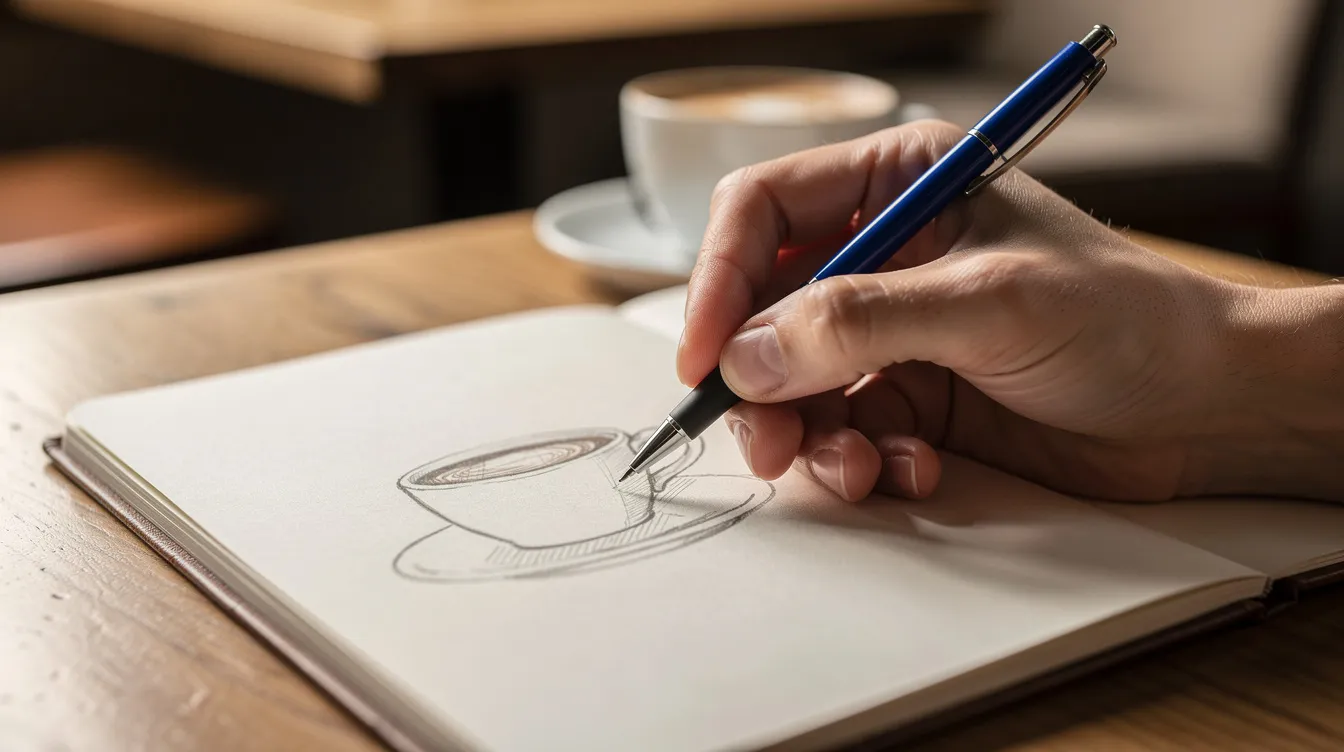
“Breakfast week”: the same plate or mug daily, so change over time shows. Sketching in pencil first keeps it light.
-
“Hands at work”: your own hand, which holds still when you want it to.
-
My own favourite: I drew every item in my work bag over a week, one per spread, and it became my best one. A comment with the date, place, and one detail (“late train, cold hands”) makes a bad drawing worth keeping, and I posted that spread on my fridge.
Key Strengths
Five minutes or less per drawing, no setup, and “bad” drawings cost nothing, which suits sketchbooks that live in a coat pocket. Stop when the timer stops: if I stop on time I come back tomorrow, and if I push to finish I dread the next one.
Possible Limitations
Can feel visually boring if you crave fantasy, and moving subjects frustrate anyone expecting tight realism, so keep your lines loose. Skip faces of people nearby; staring is awkward. Watching a few videos of urban sketching showed me that loose lines are normal.
2. Simple Shape Challenges (For Absolute Beginners)
On day four of that first 30-day challenge, I nearly closed the sketchbook for good. Instead I filled the page with boxes, circles, and cylinders. No subject, no scene, just shapes. It was the first sketch that felt easy, and it kept me going.
Why These Ideas Work
Almost anything breaks into simple shapes, and repeating one shape removes the “what should I draw” decision while your hand warms up, so you can focus on your hand and not the subject. The first page causes real anxiety for many artists, and one trick is to skip it and start on the second. Sketching a few thumbnails can ease the pressure too. Simple shape drills are also basic techniques you can return to when inspiration is low.
Best For
People who say “I can only draw stick figures” and want zero pressure, with exercises that look like practice. Art students warming up before class will like it too.
Example Page Ideas
-
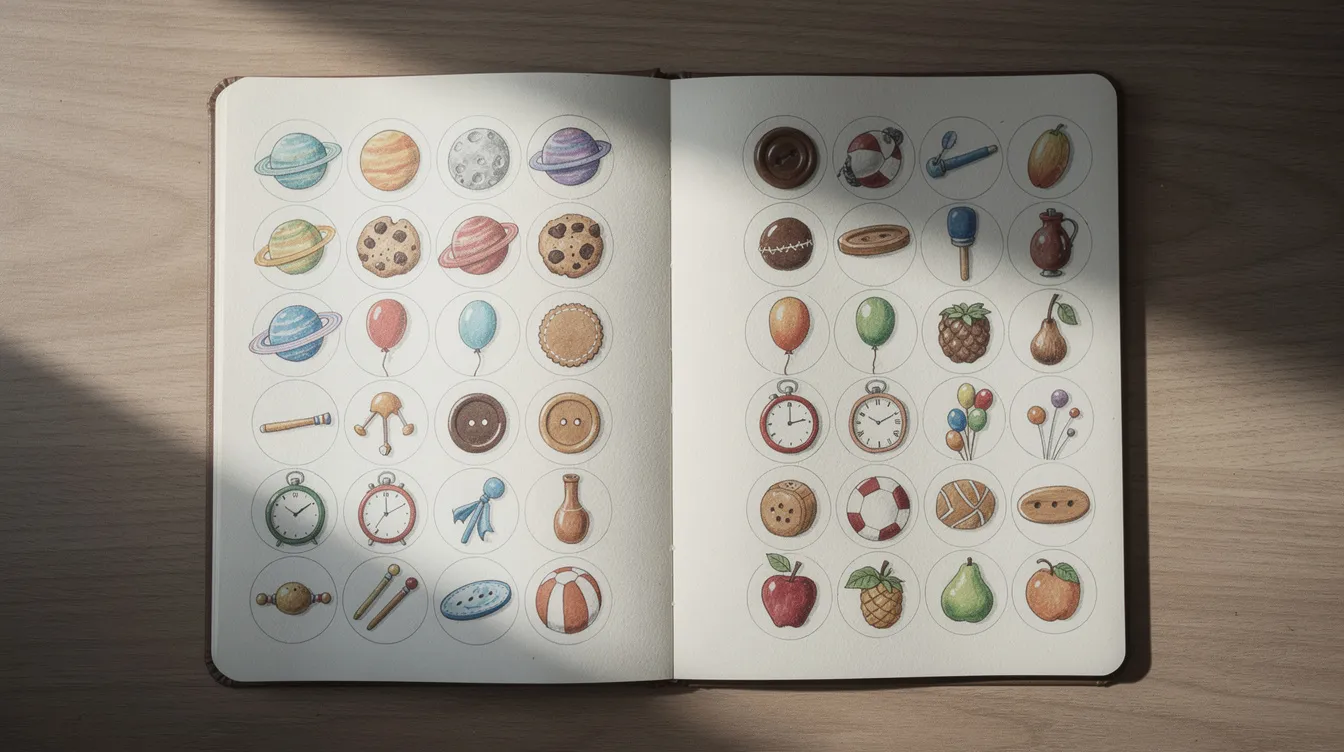
“Circle page”: 45 or more circles turned into planets, buttons, cookies, and emojis.
-
“Box city”: stacked, rotated boxes that become buildings or shelves.
-
“Line library”: a pencil, a ruler, and ten kinds of line, with a comment on which felt best.
-
An A-Z object hunt: one object per letter across a week, which is a good way to create a visual dictionary.
Key Strengths
Low stress, since mistakes are part of the pattern, and it beats the scary start of a new sketchbook. Easy to stop and start in five-minute pockets.
Possible Limitations
Gets dull after weeks without real objects, and some people dismiss these exercises as “not real art,” so reassure them: they count as practice, and they build the lines and shapes that fill every one of my sketchbooks.
3. Contained Worlds (Drawing Inside Shapes)
There is a particular charm in drawing a scene inside a jar, an envelope, or a keyhole. It shrinks the blank page to a small window, and suddenly composition feels manageable. This echoes my habit of drawing a labelled map of something small, like my desk or my kitchen, and a contained world does the same thing with a frame around it.
Why These Ideas Work
A defined boundary makes composition easier, and contained worlds feel like tiny stories when you run out of purely visual ideas. The frame also gives you a small space to focus on, so the drawing never sprawls. Sketching inside a frame is the quickest way I know to create a sense of place.
Best For
Story-minded daydreamers, art students, and anyone overwhelmed by big spreads.
Example Page Ideas
-
“Inside the jar”: a tiny library or rainy city living inside a jar.
-
“Envelope secrets”: tickets, receipts, and moods spilling out.
-
“Snow globe seasons”: four globes, one per season or city.
Key Strengths
Spreads become a loose comic or illustration series, and pen plus a light wash or colored pencil works well. Easy to repeat weekly, such as one new jar every Sunday, until your sketchbooks hold a whole shelf of them.
Possible Limitations
Small details can push a drawing past ten minutes, and one container shape gets repetitive, so vary it over the weeks.
4. Music, Memories, And Mood Pages
One January I had a playlist on repeat during a stretch of Edmonton winter that felt endless. I started sketching tiny scenes that matched the songs: a frozen bus stop for a slow track, scattered stars for something louder. The inspiration came from the songs, and those sketchbooks became visual diaries. Visual journals help many people process a day, and many teachers use this kind of page work to understand students better and spot academic or personal struggles early.
Why These Ideas Work
Pairing drawing with music or memory makes the time more meaningful, and the spreads double as journals when you do not feel like writing sentences. My version: draw three things you remember from yesterday without looking anything up. Visual journals help many people process a day, and students use the same trick to review a lesson.
Best For
Music lovers and people who keep journals and want a sketchbook to record their year, not just exercises.
Example Page Ideas
-
“Song illustration”: write a lyric on the page and draw one small image beside each line.
-
“Month in objects”: ten labelled objects that defined a month, such as March 2026, each with a one-line comment.
-
“Weather diary”: a daily tiny sketch for a week, with date and temperature.
-
“Favourite decade”: outfits, gadgets, and icons from a time you love.
Key Strengths
These spreads tie drawing to real life and feelings, and meaning matters more than polish. They are the sketchbooks and journals where you might write a note, add a date, and create something worth flipping back to.
Possible Limitations
Some memories are too personal to share, so remember it is fine to keep your sketchbooks and journals private. Technical-practice fans may want to combine this with other categories.
5. Theme-Of-The-Month Challenges
My first 30-day challenge nearly ended on day four. What saved it was lowering the bar: I stopped trying to draw a finished scene each day and switched to one tiny object, so I could focus on a single cup or leaf, sketching it slowly. Challenges give you low-stakes room to grow, and the secret is making the daily task smaller than you think you need. If you want a practical routine to help you finish a draw challenge, I wrote about that too.
Art challenges like Inktober encourage daily drawing. Inktober asks artists to create one ink sketch or other small artwork daily in October, and it has inspired thousands of people since 2009. I watched videos of Inktober artists for tips, and I was inspired to pick a small theme of my own. For something more intense, the 100 heads challenge asks for 100 heads in 10 days.
Why These Ideas Work
One theme for a set number of days removes decision fatigue, and it gives each day a clear direction. Public challenges exist, but private ones with gentler rules work just as well. Using prompts can fill a month of spreads before you realize you have been drawing consistently, and themed sketchbooks keep the momentum going. I posted my results in a small group chat, and that little community kept me honest, because friends would comment on each drawing.
Best For
People who like calendars, checklists, and visible streaks, and returning artists who want a structured restart. If you are interested in a challenge but fear the commitment, start with a week. Students cramming for exams and people who keep journals both like the daily check-off.
Example Page Ideas
-
“30 cups in April”: varying angle and decoration each day.
-
“Week of plants”: one leaf is enough. Outline and one vein, then stop.
-
“Face Friday”: one quick face each Friday for three months.
-
“Inktober for beginners”: 10 or 15 prompts instead of 31 drawings.
Key Strengths
Builds consistency and a sense of completion, lets you notice improvement between day 1 and day 30, and is easy to share with a friend. You can join a community challenge or run your own, and I have posted a finished month on my fridge more than once.
Possible Limitations
A missed day can trigger shame. My rule is never to skip two days in a row, and weekend catch-up with two small drawings is fine. Themes chosen too narrowly get boring, so pick something with plenty of variation.
6. Mixed-Media Play Pages
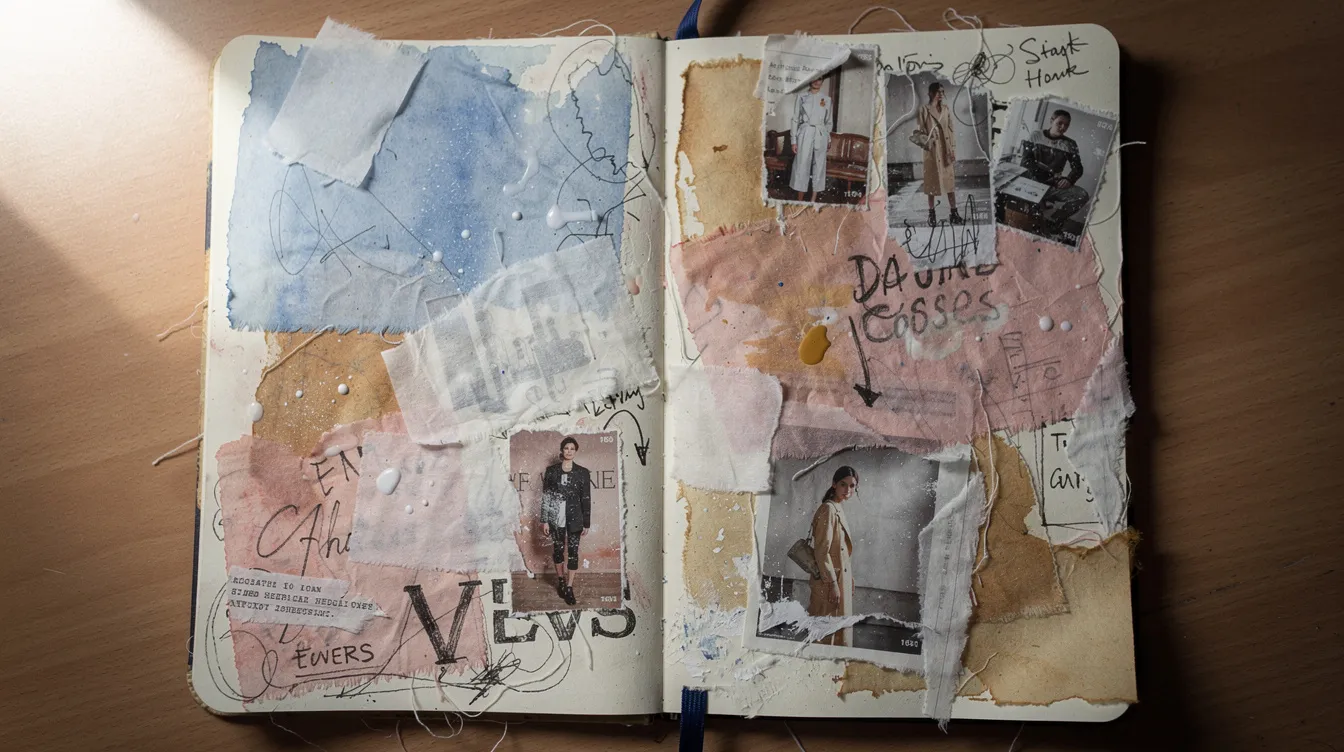
I keep one cheap mixed media sketchbook only for experiments with markers, watercolor, simple painting, and collage scraps. I picked up most of my tricks from short videos, and having several sketchbooks gives me creative freedom, so one book can be my “mess” book. Plenty of people turn the same idea into art journals.
Why These Ideas Work
Switching tools and textures wakes up creativity and makes messy drawings acceptable, which lowers perfectionism. Trying different mediums pushes you to explore new styles, and sketching with mixed mediums on one spread is a lesson in letting go. A crowded spread feels like a record of a day, while an empty one with a single careful drawing feels like a test.
Best For
People stuck in neat pencil sketches, crafters and scrapbookers, and art students curious about other mediums.
Example Page Ideas
-
“Watercolor doodle strokes”: loose stripes in two or three colours, then icons drawn over them once dry.
-
“Magazine mash-up”: glued words or photos drawn into a scene, or cut-out shapes you turn into hybrid creatures to create something odd.
-
“Limited tools day”: one black pen and one colored marker, nothing else.
-
“Coffee stain art”: use a coffee or watercolor stain as a shape to inspire an illustration.
Key Strengths
Good for restless or anxious days, produces backgrounds to draw over later, and teaches how your paper and different mediums behave.
Possible Limitations
Messy on a bus or at a desk, so save it for home and keep the paint away from your daily sketchbooks. Watercolor can buckle thin cheap paper, so try travel palettes or brush pens. I posted my first mess spread to the group chat and got only laughs.
7. Social And Silly Drawing Prompts (To Get Out Of Your Own Head)
Lighthearted prompts and drawing with kids or friends reset a perfectionist mindset faster than anything else I have tried. A prompt is a starting point I am allowed to bend: “a lighthouse” can become the lamp on my desk, and it still counts. Random prompts take the pressure off sketching and help when you are unsure what to draw. If you are unsure of what an art prompt is, that post explains it.
Why These Ideas Work
Humour and shared prompts remove the pressure to be “good,” and silly themes work as warm-ups or stand alone as a fun habit. Combining unrelated ideas often produces the most interesting spreads, and a silly prompt is a handy source of inspiration on a dull day.
Best For
Self-critical people who fear judgment, and parents, relatives, and teachers drawing alongside kids and teens. If you are interested in drawing with children, this is the easiest start. Students in an art class use prompts like these as a warm-up, and teachers like how little setup they need.
Example Page Ideas
-
“Rubber duck challenge”: fill a sheet with strange versions of a rubber duck, or create fake packaging for them. My niece posted hers on her bedroom door.
-
“Invent a skateboard”: decks you would have loved at 14, inspired by old catalogues.
-
“Creature mash-ups”: combine two everyday animals into one and create a field-guide label.
-
“Group doodle night”: pass the sketchbook around, one to two minutes each, and let everyone add a comment.
Key Strengths
Builds confidence indirectly because you are too busy laughing to overthink, gives “I’m not artistic” friends an easy way in, and makes spreads you will enjoy years later. Friends tend to leave a kind comment, not a critique. I never tear anything out of my sketchbooks: the worst drawings are often the ones I enjoy flipping back to.
Possible Limitations
Only funny prompts can mean skipping skills you care about, so balance with other categories. Some adults feel self-conscious at first, so start in private sketchbooks.
Quick Comparison Of Sketchbook Idea Types
This helps you match an idea type to your situation at a glance.
|
Category |
Best For |
Time Needed |
|---|---|---|
|
Tiny Daily Observations |
Commuters, scattered 5-minute breaks |
5 min |
|
Simple Shape Challenges |
Absolute beginners, “cannot draw at all” |
5 min |
|
Contained Worlds |
Storytellers, overwhelmed by full pages |
10-20 min |
|
Music, Memories, And Mood Pages |
Reflective types who keep journals |
10-15 min |
|
Theme-Of-The-Month Challenges |
Structure lovers, visible progress |
5-20 min |
|
Mixed-Media Play Pages |
Breaking perfectionism, exploring materials |
15-20 min |
|
Social And Silly Drawing Prompts |
Drawing with kids and friends, loosening up |
5-15 min |
How To Choose Which Sketchbook Ideas To Try First
You do not need all seven categories at once. Start with one or two that match your real life and worries, try a category for one week, then review what felt easiest and most fun.
A few practical habits make any choice easier: keep an “ideas” page at the back of your sketchbook where you write two words per idea, use pocket-sized sketchbooks because small books are less scary, and clip a pen to the cover so there is no hunting for one. Leave some space beside each drawing for a comment, and use that space to jot suggestions to your future self.
Choose Based On Your Time And Energy
With ten spare minutes a day, lean on Tiny Daily Observations and Simple Shape Challenges. With longer quiet evenings, explore Contained Worlds or the mood pages. A good direction is to pair one longer weekly session with a few very short bouts of sketching on other days. Students and shift workers can swap days freely.
Choose Based On Your Current Drawing Skills
Beginners: Simple Shape Challenges, the silly pages, and Mixed-Media Play. Returning or intermediate artists who are interested in focused practice: Theme-Of-The-Month Challenges, Contained Worlds, detailed observation. Students who want a goal about the size of one lesson can pick a category a week. But ignore the labels if something looks fun. Fun matters more than levels, and fun is what makes you come back.
Choose Based On Your Personality And Goals
List lovers: Theme-Of-The-Month Challenges and structured observation logs. Reflective people who keep journals: the mood pages. Spontaneous types: Mixed-Media Play and the silly pages. Mixing is encouraged. An October ink challenge that includes silly rubber ducks and serious city art on alternating days is a perfectly valid plan.
Which Sketchbook Ideas Are Best For You Right Now?
Choose Tiny Daily Observations if time is your obstacle. Choose Simple Shape Challenges if you fear the page. Choose Contained Worlds for little illustrated stories. Choose the mood pages for a visual diary. Choose Theme-Of-The-Month Challenges for streaks and a sense of completion. Choose Mixed-Media Play if perfectionism has frozen you. Choose the silly pages for laughing and drawing with others.
Pick one idea today and fill a single page in one of your sketchbooks. Do not worry about designing a perfect yearlong plan. One page is the whole point.
Final Thoughts: Turning Sketchbook Ideas Into A Habit
Ideas only help if they are small and concrete enough to fit daily life, and there is no “correct” category. The best idea is the one you will try this week with the time and tools you have. There is good reason to start small: a tiny habit survives a bad week. Find ideas that make you want to open the book, not ideas that look impressive on someone else’s page.
My own rule: at least one mark on paper every day I ride the train, even if it is a minute of sketching a shoe. Showing up matters more to me than any single drawing. I hope that keeps the creative juices flowing for you as it has for me over these two years, and a quick comment under each drawing helps me see how far I have come.
That is the real answer to “what do I draw?”: whatever lets you open the book today. Interesting subjects come later, and they tend to come from the habit, not before it. You do not need a burst of inspiration or a wave of creative juices to start. You need a pen, something within arm’s reach, and a moment to write the date. You can create something without a plan.
Treat your sketchbooks as a laboratory, not an art museum. Your creativity will grow from the doing, so focus on starting. Start with one page today.
FAQ
What should I draw if I have no reference and no supplies?
Your own hand or the closest object, with whatever pen or pencil you have. You do not need photo references or special materials. Ordinary things are good practice, and they are always present.
How long should a sketchbook entry take?
I aim for five to ten minutes. A short, fixed time makes it easier to start and to stop, so you return tomorrow. Many people find that even sketching for a few minutes is enough to get ideas moving, and holding an image of the subject in your head before the pen touches paper helps. Students and busy adults alike fill their sketchbooks this way.
Do I need to draw every day?
No. I miss days. Never skipping two in a row makes restarting guilt-free. If you watch for that pattern and catch it early, the habit stays alive, and the journals and sketchbooks you keep will not gather dust.
What if I hate everything I draw?
That is normal. Keep drawings small, time short, and add the date and a short comment about where you were so each one has value beyond how it looks. Your doodles and rough lines are still worth keeping. I comment on my own drawings sometimes, just a word or two, and it changes how I feel about them later.
Are prompt lists cheating?
Not at all. They remove the decision so you can spend energy drawing instead of deciding. You can always swap in a subject you can see if the prompt does not fit. A prompt is a direction, not a cage. It is an awesome way to keep sketchbooks going when you feel stuck, and no lesson in the world will tell you otherwise.