

Shrink the job until it is almost too small to skip. That is the short answer. Here is the long one, from someone who nearly quit on day four.
Why I Started Sketching Daily On A Cold January Morning
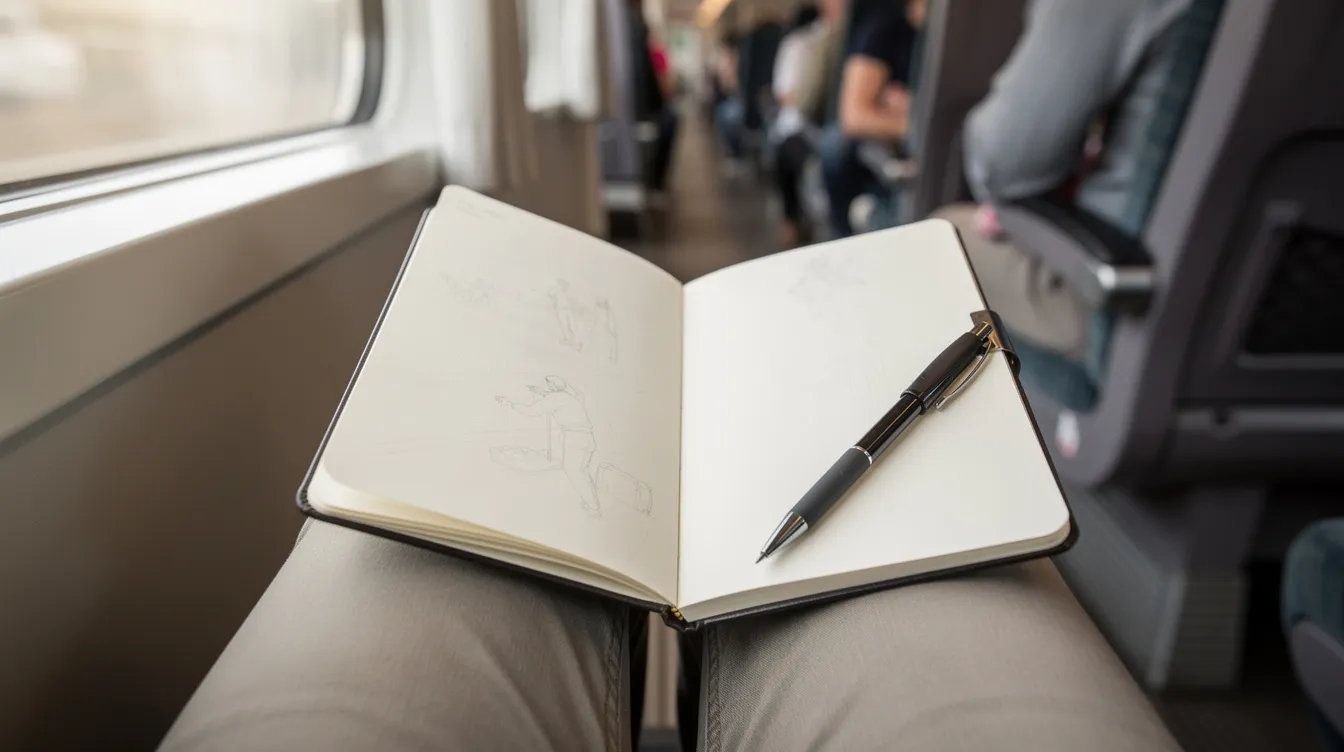
Two Januaries ago, on a minus 25 morning in Edmonton, I sat on the 7:32 a.m. train from Century Park with a blue reusable coffee cup in one hand and a pocket sketchbook in the other. The windows were fogged. The commuters around me were bundled in parkas, half asleep. I had decided, three days earlier, to try sketching daily for thirty days, which for me turned out to mean a short, repeatable drawing session of five to fifteen minutes, not a polished finished piece every night. By day four it already felt like homework because my original plan was a detailed drawing every evening, and I had neither the time nor the energy for that after a full shift planning bus routes.
What saved the challenge was a boring change. I swapped the big sketchbook for a small pocket one. I made the train ride my slot. One page, done when the train reached my stop. That small rule is the only reason I am still at it. I committed to sketching for just five to ten minutes a day, and I paired that commitment with an existing habit, the commute, so it required almost no willpower to begin.
Here is my transit planner angle: people repeat the routes that are easy, predictable and take them somewhere. Habits work the same way. A pocket sketchbook aids in capturing inspiration during commutes because the context never changes. Same seat, same pen, same twelve minutes. Sketching daily builds drawing skill, sharper observation, and creative confidence over time, and it also leaves you with a visual record of ordinary days you would otherwise forget. I am a hobbyist, not an art school graduate or a teacher, so everything here is what I have tried, with notes on what flopped. If you are a beginner, coming back to drawing after a long break, or trying to keep a sketchbook going around a full-time job or school with only ten to fifteen spare minutes, this is for you. I get into the small rules that make a daily sketchbook habit stick, short routines, 30-day drawing challenges, prompts for no-idea days, drawing on a commute, missed days, slumps, and getting better without art school. Drawing for short intervals builds momentum, lowers the pressure to be perfect, and makes it easier to start again the next day.
Sketching Daily vs Finished Drawings: What Changed For Me
Before the daily habit, I drew rarely. One Saturday in March 2023, I spent four hours on a single “proper” portrait from a photo. It turned out fine. Then I did not draw for six weeks. Compare that with March 2024, when I filled five quick bus stop sketches in a single week, each one rough and lopsided, and learned more about proportion from those five pages than from the portrait.
The mental shift was immediate. Once each page felt low-stakes, I became more curious and less anxious about making art. I stopped worrying about “ruining” expensive watercolour paper and started scribbling in a cheap notebook. Sketching allows artists to experiment without commitment to perfection. Lower your expectations and allow for imperfect drawings, and instead of trying to polish every detail, you explore more freely. My view: I would rather have three hundred ordinary pages than ten good ones and a long gap.
I now keep a rough 80:20 ratio of daily sketching to finished pieces. The stamina and focus from regular practice carry back into larger drawings when I have more time. Daily sketching improves observational skills and creativity in a way that weekend marathons never did for me, because the repetition is what counts.
What A Realistic Daily Practice Looks Like (12 to 15 Minutes, Not An Hour)
A daily practice does not have to be long. My weekday routine is the 7:32 a.m. train and the 4:46 p.m. ride home. A session looks like this: two minutes choosing a subject, eight minutes sketching, two minutes adding a note or date. I now decide what to draw before I sit down, and my seat on the train does half the work. Sketching can be done in short sessions of twenty minutes or less, and mine rarely hits even that. Daily sketching builds muscle memory and fine motor skills simply because the hand repeats the motions every single day.
Some days I manage only a tiny coffee cup contour or the silhouette of the High Level Bridge as the train crosses the river. On weekends I stretch to twenty five minute cafe sketches in Old Strathcona, or a quick five minutes while waiting for laundry. My rule: a sketch counts if the pen touched the page, so the goal is “pen on paper every day,” not “masterpiece every day.” I suggest readers define their own minimum. One object, one minute, one line. Whatever survives an exhausted Tuesday is the right bar.
The Urban Sketchers movement, which began in 2007 and now has over five hundred chapters in more than seventy countries, is built on drawing quickly on location from life. That philosophy matches commuter sketching perfectly. Sketching from life offers a dynamic experience compared to photos, and if you want inspiration or a community to explore, Urban Sketchers is a good place to look. Keep your sketching tools readily available to avoid excuses, and the habit almost runs itself.
Gathering A Simple Everyday Sketching Kit
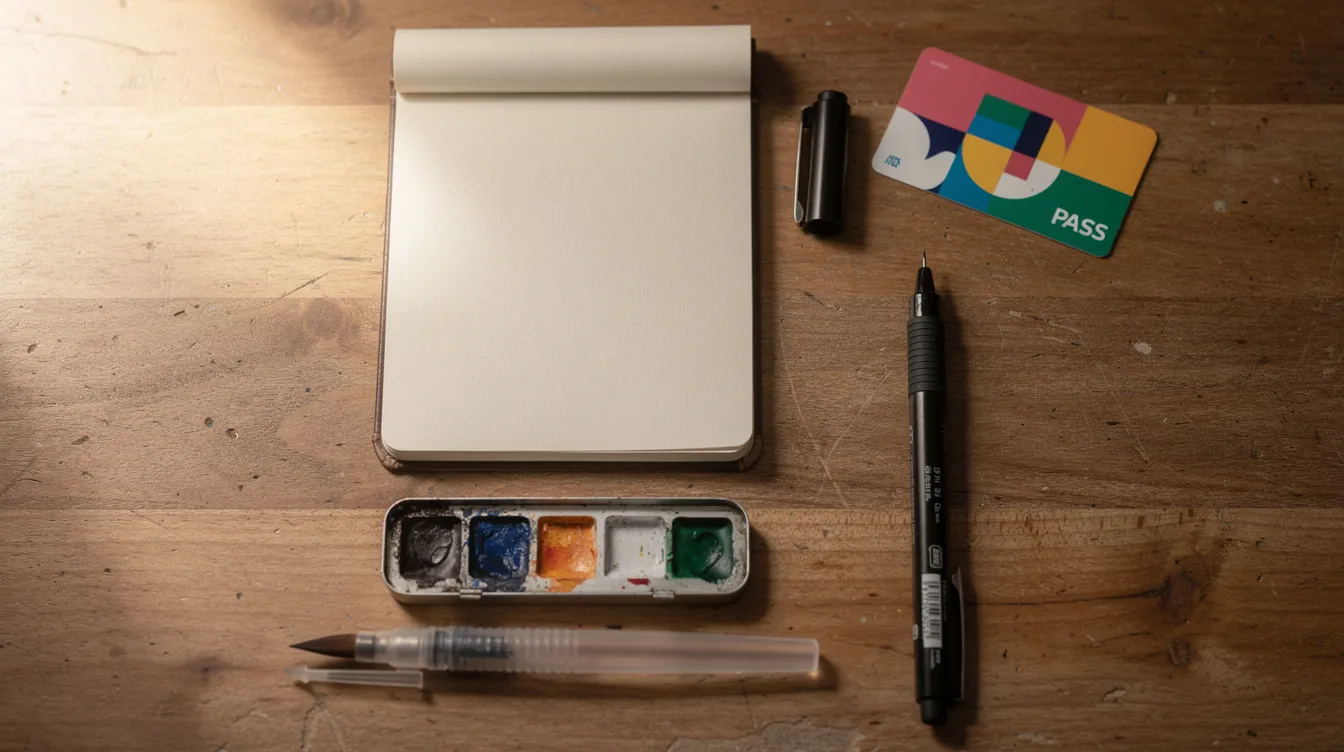
My toolkit fits in a small cross body bag and cost less than one online art course. Here is what I use:
-
An A6 hardcover sketchbook, started January 2025
-
A grey fineliner (my main tool)
-
A 0.5 mm HB mechanical pencil (rarely)
-
A tiny eight color watercolour palette
-
A waterbrush
I mostly reach for the pen because it stops me from erasing and fussing, and the tool can matter because different marks change how a subject feels on the page. The pencil comes out maybe once a week. If you want to paint with watercolour, use a sketchbook with pages over 150gsm so the paper handles washes without buckling.
A small, cheap book beats a large or fancy one on the train. It opens fully on my lap, attracts less attention, fills up fast for a sense of progress, and does not make pages feel precious. Historically, sketchbooks were working tools for architects and travelers, not display pieces. Rough studies, visual notes, half finished ideas. Knowing that takes the pressure off a blank page. If you want the general history of the sketchbook, that overview is a useful starting point.
Picture the kit laid out on a kitchen table on a Sunday night: sketchbook, pen, waterbrush, palette, bus pass and transit map beside it. Optional extras: a highlighter for quick color, a clip to hold pages open at a windy bus stop. The essence of this setup is portability and low fuss, with materials that support the kind of story you want the sketch to tell, not a studio. The less stuff you carry, the more likely you are to carry it.
Starting Small: My First Month Of Daily Practice
In January 2024 I decided on a thirty day “sketch everyday” challenge after New Year. I did not post anything online. I did not tell anyone except one friend. The month broke into four phases:
-
Week 1: Enthusiasm. Everything felt new and fun.
-
Week 2: Resistance. The novelty wore off and I wanted to skip.
-
Week 3: Quiet routine. I stopped thinking about whether to draw.
-
Week 4: Real improvement. I noticed my lines were steadier.
Early subjects were boring and lovely in hindsight: my winter boots on January 3, a Tim Hortons cup on January 5, a fellow passenger’s backpack on January 9. Around January 11 I wanted to skip badly. I kept the streak alive with a ninety second doodle of my apartment keys before bed. That is all it took.
For readers about to begin a challenge: decide ahead of time what a “minimum” day looks like. My challenge nearly died on day four because I set the bar too high. Daily sketching builds confidence by showing progress over time, but only if you survive the first two weeks. I put a dot on a calendar by my front door for each sketching day, and the row of dots became something I did not want to interrupt. Track your progress visibly through visible checklists or dated pages. Publicly committing, even just a dot on a wall calendar, can enhance accountability. If you prefer a set path, try to finish a draw challenge from first page to last.
Most sketches were awkward, crooked or half finished. They still built a sustainable habit. A year long sketch a day project can yield 365 sketches, but the first thirty are the hardest. Pick a start and end date, say March 1 to March 30, 2027, and commit to showing up, not to producing pretty pages.
What To Draw When You Are Tired Or Out Of Ideas
My worst slump came in February 2024 after the novelty wore off. The biggest speed bump was not skill. It was deciding what to draw. The lesson I learned: draw what is in front of you, even ordinary subject matter on tired days. Gloves on the seat, a coffee cup, the person across the aisle drawn quickly without staring, the ad panel above the window.
For sleepy evenings, here are my go to prompts:
-
The contents of my backpack
-
The view from the kitchen sink
-
Shoes by the front door
-
My transit pass
-
My coffee mug at 9 p.m.
-
The shadow of a plant on the wall
-
Whatever my hand is resting on
I keep a handwritten “rainy brain list” on the inside back cover of my sketchbook, started February 10, 2024, so the decision is made before I sit down. Engage in prompt based drawing to eliminate decision fatigue. Use everyday objects as subjects for sketching. Sketching boring subjects can elevate the ordinary to something special, and choosing subjects that genuinely interest you, even if they seem mundane, leads to better engagement. If you would rather not build your own list, you can pick an art prompt and start drawing right away.
Recurring themes create a record of life. My blue mug across seasons, the changing coats on the train from January to April. These prompts, rooted in my actual schedule, differ from art school assignments. I suggest readers build a local list from their own buses, cafes, parks and objects. Find a few go to subjects for days when inspiration is lacking, and you will never stall with a blank page again. Sketching everyday life creates a wonderful record of your experiences. For more starting points, read my guide to sketchbook ideas for blank days.
How Sketching Daily Improved My Skills Without Formal Art School
I never went to art school. I work full time in city transit planning. That is the point: my progress should feel approachable. Between my March 2024 and March 2025 sketchbooks, I noticed three concrete changes: better proportions in faces on the train, more confident linework in buildings, and improved shading on winter coats.
Exercises developed naturally. I drew the same station bench three times. One day I tried contour only. The next, quick hatching. Drawing moving people improved my reaction time compared with copying still photos. Daily sketching can improve drawing technique over time, and sketching helps develop a personal artistic style because you discover what your hand wants to do when it is not being told. Experiment with different drawing techniques to maintain interest.
I sometimes compare online courses on Habit of Drawing, but my core learning comes from regular practice. If you hear a voice that says you are not talented, treat the sketchbook as a training log. Skill comes from repetition, and repetition needs a bar low enough to clear on your worst day. Sketching daily helps improve observation skills in a way no single lesson or course can replicate, because the brain learns by doing, not by watching.
Keeping A Wonderful Record: Looking Back Through Old Sketchbooks
On a rainy Edmonton evening last fall, I sat on the couch and flipped through my first full pocket sketchbook, January to June 2024. Every page was dated. Three sketches became unexpectedly precious: my coworker’s desk plant before they moved teams, the broken umbrella from April 17, and people eating ice cream on Whyte Avenue in May, the first warm day scene of that year.
A sketchbook serves as a visual diary of thoughts and growth. These imperfect sketches are a more honest record than phone photos, because I only drew what caught my attention. Using a sketchbook preserves the story of your life over time. Regular sketching creates a collection of personal experiences, and daily sketching can create a valuable record of life experiences that no camera roll can match.
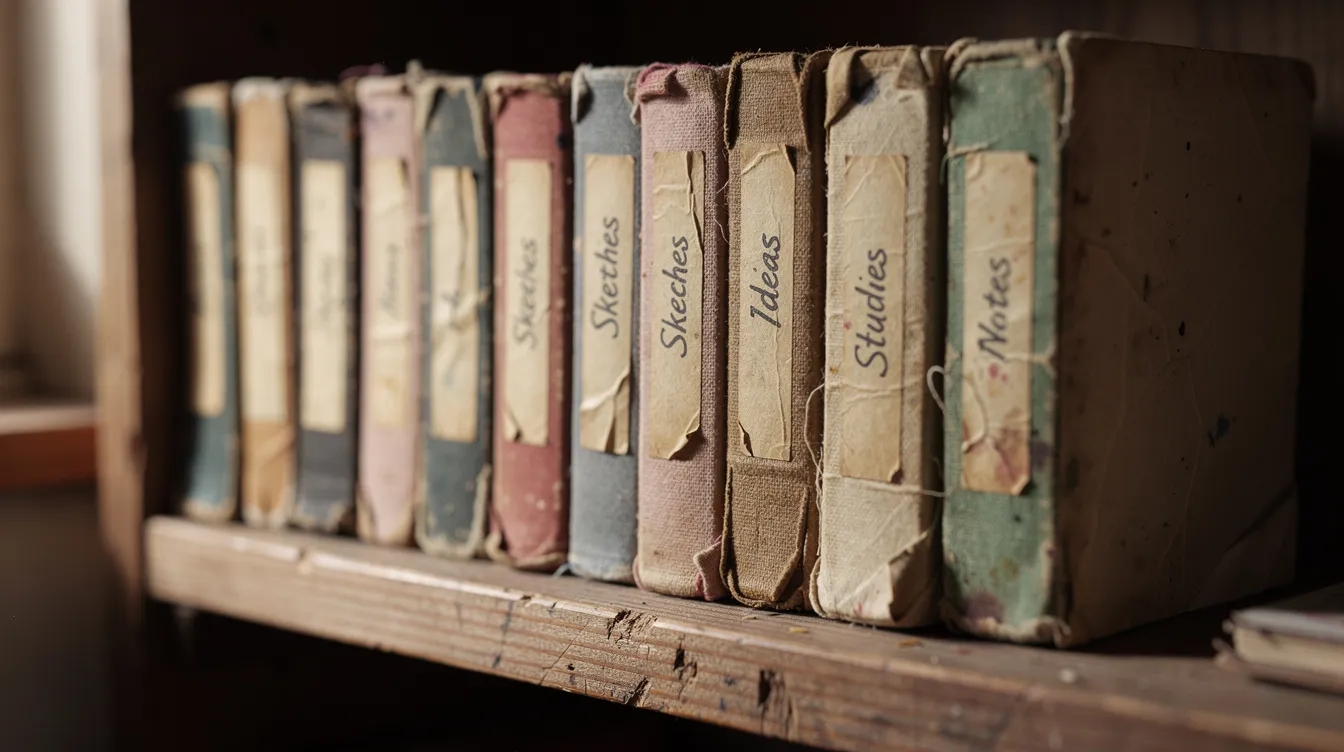
Dating every page is the best motivation I have found. Flipping back shows progress I cannot feel day to day. I label each spine with months and year, like “Jan to Mar 2025,” and shelve them like diaries. Imagine your own shelf five years from now, full of battered sketchbooks documenting commutes, grocery lines and kitchen tables. That picture alone kept me going through more than one slump.
Dealing With Missed Days, Slumps, And The Inner Critic
I have missed stretches. A week in July 2024 during a family visit. A three day migraine in November 2025. Accept that missing a day is normal and does not hinder progress. My rule is “never miss twice.” One skipped day is just a gap. Two in a row starts a new pattern. The morning after a missed day, I restarted with a five minute drawing of my alarm clock. That was enough.
The inner critic talks on those days. “What is the point of another bad train sketch?” Daily sketching gradually softened that voice, because I realized the world did not end when a page looked bad. Three tactics that help:
-
Sketch something deliberately silly (a potato with a face, your shoe as a cartoon character)
-
Set a three minute timer and stop when it rings
-
Draw with your non dominant hand to lower expectations on purpose
I sometimes write a short note beside a rough sketch: “tired, long meeting, just happy I showed up.” Focused drawing can induce a state of flow and lower cortisol levels, and sketching reduces stress by promoting mindfulness and focus. Even a bad day in the sketchbook is a good day for the habit. A regular practice is built on forgiveness and restarting, not on perfect streaks or flawless pages.
Stitching Studies Into Finished Pieces
Sketching daily is not a replacement for finished work. It is a foundation that quietly supports it. Dozens of small train window landscape sketches from spring 2024 became a larger watercolour painting of the North Saskatchewan River in August 2024. I would never have attempted that piece without the studies.
Sketchbooks help with bigger pieces in concrete ways:
-
Testing color mixes before committing to good paper
-
Checking compositions in thumbnails
-
Practicing tricky parts like hands or difficult shapes
Because the daily work feels low pressure, it functions as a creative laboratory, and those studies help me decide how much detail a finished piece actually needs. I mark promising sketches with a small star so I can return when I have time to create something more considered. The curiosity that builds in a sketchbook feeds the courage to paint larger.
Creating A Routine That Fits Your Life, Not Mine
My transit based rhythm will not match everyone’s. The point is to attach sketching to something you already do, in the same space, at roughly the same moment. Three sample routines:
-
A parent sketching at the kitchen table at 6:30 a.m. before the house wakes up
-
A student drawing in a fifteen minute gap between classes
-
An office worker sketching on a twenty minute bus ride home
Choose a specific anchor. Morning coffee, lunch break, bedtime tea. During busy planning weeks I shift my own slot from the commute to a ten minute evening session at my desk. Small visual rituals help: sketchbook next to the coffee maker, pen in the same backpack pocket. A routine grows from repetition and a well designed environment, not willpower alone. The advice is simple: make the right thing the easy thing, and let the body remember what the brain forgets.
Closing Thoughts: A Year Of Sketch Everyday And What I Hope For You
In December 2025 I looked at the row of filled sketchbooks from two years of daily practice. Sharper observation on Edmonton walks. More creative courage. The quiet joy of a visual diary I can hold in my hands. I had become, without meaning to, someone who draws every day, an account of an ordinary life told in ink and pencil and occasional watercolour.
You need no art school, no expensive materials, no hours of free time. You need a pen, a small book and a few minutes most days. Here is one immediate action: pick a start date this week, choose a time and place, and decide on the first object you will draw. Your morning cup tomorrow is a fine subject.
I hope you will one day flip through your own record of ordinary days and see both your life and your skills woven together on those pages. That is the beauty of this whole thing. One small page at a time is enough. Come sketch with me.
FAQ
How long should I sketch each day? Start with five to fifteen minutes. I use twelve, the length of my train ride. The point is to pick a time you can repeat even on a bad day.
What should I draw if I have no ideas? Draw what is near you. A mug, a shoe, your hand. Keep a short prompt list at the back of the sketchbook so you never have to choose on the spot.
What if I miss a day? Restart the next day. My rule is never to miss twice. Guilt is what makes people quit, not a single skipped page.
Do I need an expensive sketchbook or supplies? No. A cheap pocket sketchbook and one pen are enough. Cheap materials make it easier to draw badly, which is free from pressure and exactly where the practice happens.
Is it better to draw from life or from photos? Both work. I mostly draw from life because it is available anywhere and teaches me to be quick, but a photo helps on stuck indoors days when the weather or your body will not cooperate.